
Innovative Soft Robotic Model of the Human Heart Developed at UNSW
Researchers from the University of New South Wales (UNSW) have unveiled a groundbreaking soft robotic model of the human heart, capable of simulating a range of heart diseases. This advancement is set to enhance the testing of cardiac devices and improve medical outcomes.
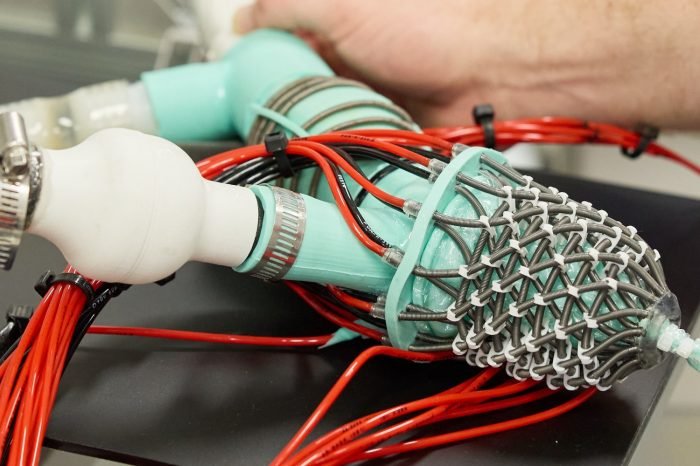
The UNSW team has crafted a fully synthetic soft robotic heart that mirrors the intricate movements and internal structures of a natural heart. This innovation paves the way for superior treatments, safer medical devices, and more personalized healthcare solutions.
As detailed in prestigious journals Nature Communications and Advanced Science, the research introduces a beating model focusing on the left side of the heart. It incorporates artificial valves, papillary muscles, and chordae tendineae—elements essential for healthy cardiac function that often suffer from disease.
The device replicates real-life scenarios, such as cardiac valve leakage leading to retrograde blood flow, thereby increasing risks for heart failure and other serious complications. This research aims to facilitate a better understanding of heart conditions, lessen dependence on animal testing, and equip physicians with patient-specific models for enhanced treatment planning.
According to Scientia Associate Professor Thanh Nho Do from UNSW’s School of Biomedical Engineering, this advance is critical given that cardiovascular disease remains the leading cause of mortality worldwide. “Heart failure with preserved ejection fraction (HFpEF) is a particularly complex condition that frequently coexists with other health issues such as hypertension, arrhythmias, and metabolic disorders,” he explains.
The innovative model consists of flexible materials forming the internal chambers of the heart, mimicking how a natural heart contracts and twists. Unlike traditional laboratory models, this soft robotic system integrates features that regulate the mitral valve, akin to doors opening and closing to regulate blood flow.
Advanced Features of the Robotic Heart
The researchers utilized hydraulic pressure to simulate the muscle fiber architecture of the human heart, enabling the model to exhibit lifelike contraction. This approach has allowed for the recreation of disease conditions—including mitral valve prolapse—where blood does not flow efficiently.
By employing ultrasound imaging and pressure measurements, the team demonstrated that the soft robotic heart displays behaviors remarkably similar to a human heart. The model successfully produced pressure and flow patterns consistent with naturally functioning valves, while the introduction of simulated diseases resulted in characteristic changes reflecting real patient conditions.
Reducing Animal Testing in Cardiac Device Development
This simulator’s controllable environment offers the potential to minimize reliance on animal studies, particularly valuable in the preliminary phases of medical device innovation. Professor Do emphasizes the importance of creating a platform aimed at comprehensively modeling cardiac diseases and simulating treatments for devices and surgical tools.
The team envisions personalized versions of the model that can be tailored using medical imaging data, enabling healthcare providers to evaluate optimal treatments prior to surgery and improving overall outcomes for patients with cardiovascular issues.
While the current model serves as a proof of concept, several challenges remain, such as enhancing material quality and refining control systems. The researchers highlight the necessity of validating their findings against actual patient data to ensure clinical relevance.
With further advancements, the team hopes to establish this technology as a vital tool in clinical settings, revolutionizing how cardiac diseases are understood and treated. Dr. James Davies notes, “This model illustrates that soft robotic hearts can replicate disease mechanisms effectively, providing a clear avenue toward improved patient-specific modeling and treatment planning.”