

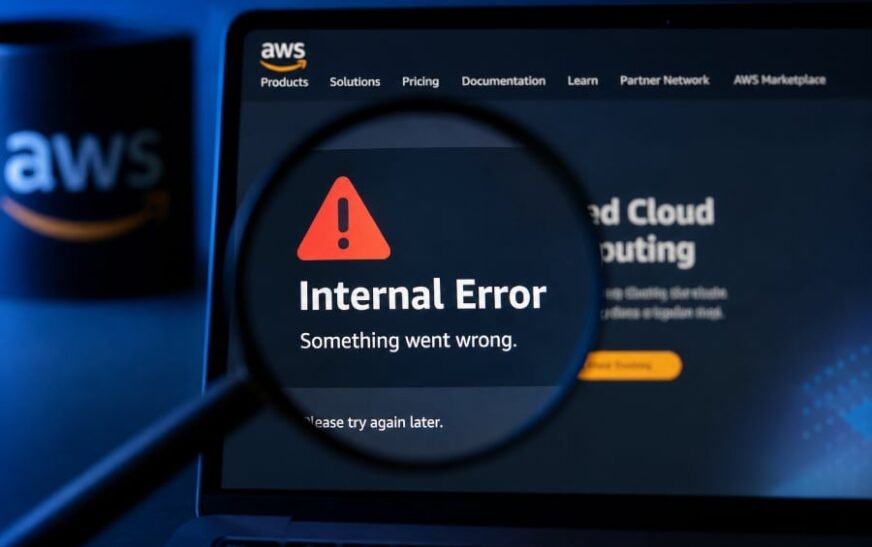
A surprising spike in cloud expenses can evoke immediate concern among users. Recently, some Amazon Web Services (AWS) customers experienced this firsthand, with estimated charges soaring to billions, and in at least one instance, exceeding $1 trillion.
Amazon clarified that this incident stemmed from a bug in AWS’s estimated billing computation subsystem. Importantly, the erroneous figures were confined to billing estimates displayed in the AWS Cost Management Console and did not impact actual usage or final invoices, ensuring that customers would not incur the inflated charges.
This temporary issue highlighted the significant disruption that unreliable cost data can cause for engineering, finance, and security teams. It underscores the challenges these teams face when trying to determine whether a dashboard error is due to a system malfunction, a compromised account, or an uncontrolled workload.
Understanding the AWS Billing Estimate Bug
As noted on the AWS status page, the issue arose following a software update intended for the estimated billing computation subsystem. Unfortunately, this change inadvertently introduced a bug that led to incorrect unit pricing during projected cloud cost calculations, causing some AWS customers globally to see erroneous estimated bills.
Users shared their experiences on X and Reddit, reporting estimated bills that ranged from millions to billions of dollars. One report, covered by The Guardian, highlighted an extraordinary case of a trillion-dollar estimate.
The formula for estimating cloud charges can be simplified to:
Estimated Cost = Resource Usage x Unit Price
For instance, if you utilize 100 GB of storage at the correct rate of $0.023 per GB, your estimated bill should be $2.30. However, if the bug miscalibrated the price to $10 million per GB, that same 100 GB would erroneously appear to cost $1 billion. While the actual usage remained unchanged, the billing estimator’s reliance on the incorrect pricing resulted in an implausible estimate.
This example, although hypothetical, effectively illustrates how flawed pricing inputs can lead to absurd total estimates. Importantly, AWS confirmed that the bug affected only estimated billing and not customers’ actual cloud usage or final bills. The company reassured that the underlying usage data was accurate, ensuring that no inflated charges would be applied.
Why Accurate Cloud Cost Data is Critical
The Consequences of Unreliable Cloud Cost Data
While bugs may appear as minor glitches, they can have far-reaching implications, disrupting services and in rare cases, leading to severe consequences. The uncomfortable reality is that we increasingly depend on software to make decisions that often go unquestioned. From calculating medical dosages and managing infrastructure to processing financial transactions and estimating cloud costs, we assume that the figures we see on our screens are accurate. Incidents like the AWS billing bug spark doubt about this assumption and remind us of the vulnerabilities inherent in all systems.
For businesses, this situation provides a crucial lesson. In a fast-paced environment marked by rapid software updates and continuous deployment, resilience transcends merely preventing cyberattacks. It encompasses the ability to detect and rectify errors before they propagate through operational software. Organizations must recognize each code change as a potential risk that warrants stringent testing, gradual rollouts, automated monitoring, and the capability to reverse flawed updates swiftly.
This incident underscores the hazards associated with frequent software updates. Mechanisms such as automated testing, staged deployments, anomaly detection, and reliable rollback procedures serve not only as engineering safeguards but also as essential financial controls when software determines costs that organizations rely on for their operational and financial decision-making.
The confusion resulting from AWS’s billing glitch may not have led to financial losses, but it serves as a critical reminder of the extent to which companies rely on software-generated data. When this data becomes unreliable, even temporarily, the repercussions can extend far beyond a mere erroneous dashboard.
In parallel news, Discord experienced a similar issue where its automated moderation system mistakenly banned over 8,000 users due to harmless images, illustrating how software glitches can transform AI-driven safety mechanisms into widespread problems.