

Global Robotics Technology Roadmap Released
Henrik I Christensen, a Professor of Computer Science and Engineering at the University of California, San Diego, has unveiled a comprehensive global robotics technology roadmap. This position paper not only examines the current advancements in robotics across Asia, Europe, and the Americas but also highlights significant opportunities within the sector.
The roadmap capitalizes on extensive research and industry insights to sketch a trajectory for global robotics technology from 2025 to 2035. It synthesizes findings from key robotics conferences—including ICRA, IROS, RSS, and CoRL—as well as pivotal machine-learning gatherings like NeurIPS and ICML. The document is enriched with market intelligence gathered from trade organizations and regional government strategies, making it a valuable resource for policymakers, technology strategists, research agencies, and leaders in industrial research and development. This robust framework is drawn from an extensive review of current research and industry statistics, complemented by Christensen’s visits to research labs across three continents.
Key Findings in Robotics Market Growth
- The global robotics market is projected to grow from $53.2 billion in 2024 to an astounding $178.7 billion by 2033.
- Asia currently leads in industrial deployments, accounting for 74% of global installations in 2024, with China representing a significant 54%. Conversely, Europe excels in safety-critical regulations and collaborative robots (cobots), while the United States remains at the forefront in AI-powered autonomy and defense robotics.
- Vision-Language-Action (VLA) models are identified as the most transformative algorithmic development, enabling unprecedented cross-embodiment generalization.
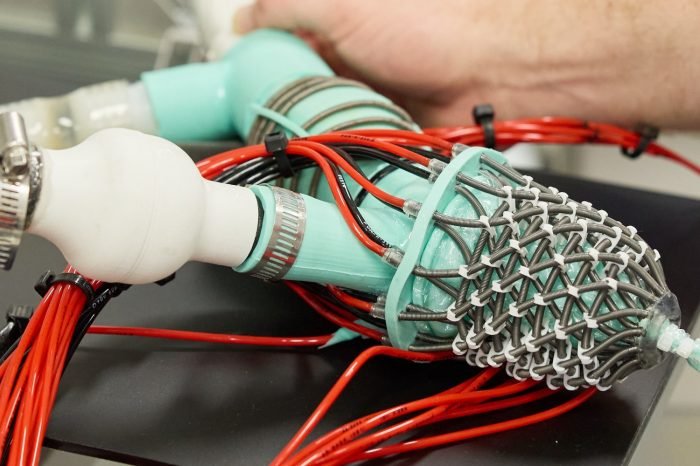
- Innovations in soft robotics and compliant mechanisms—fueled by advances in liquid crystal elastomers, electroactive polymers, and self-healing hydrogels—bridge the gap between rigid industrial systems and bio-compatible medical devices.
- The humanoid robot sector, valued at $370 million in 2025, is expected to surge to $6.5 billion by 2030, driven by a competitive race among Chinese OEMs and US technology firms to scale production.
- Regulatory asymmetries, particularly the EU AI Act which establishes the first comprehensive legislative framework for high-risk AI systems, are influencing global humanoid robot design.
In-Depth Coverage of Robotics Trends
The 52-page roadmap delves into various critical sub-topics:
- Introduction and Scope: The motivation behind the study and its methodological framework.
- Global Market Baseline: An analysis of current market trends.
- State of the Art: A survey of the academic research landscape, including embodied AI, foundation models, and human-robot collaboration.
- Enabling Technologies: Review of advances in materials science, soft robotics, and computing infrastructure.
- Regional Strategies: Examination of technological strategies across Europe, Asia, and the USA.
- Technology Roadmap 2025-2035: Insights into algorithms, hardware, materials, and systems for safety and deployment.
- Sector-Specific Analysis: Observations and recommendations covering manufacturing, logistics, healthcare, and other industries.
- Cross-Cutting Strategic Themes: The race towards humanoid convergence, sustainability issues, and geopolitical technology risks.
- Research Priorities by Region: Recommended focus areas for Europe, the USA, and Asia.
The detailed roadmap is accessible in full through the official publication, providing a significant resource for stakeholders in the robotics industry.