
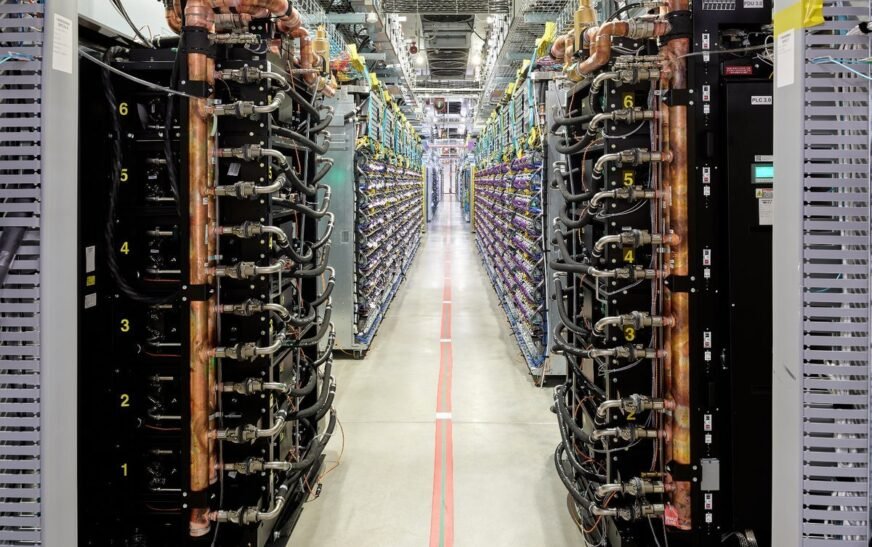
Google’s recent venture into AI infrastructure involves a significant partnership with SpaceX, valued at approximately $30.4 billion if fully executed. Under this agreement, Google has committed to pay SpaceX $920 million monthly from October 2026 through June 2029. This arrangement grants Google access to around 110,000 Nvidia GPUs, CPUs, and associated components, as outlined in a filing with the SEC.
For organizations utilizing cloud services, a crucial question arises: Will this partnership enhance access to Google Cloud’s GPU resources? Google portrays this agreement as a means to address the anticipated demand for its Gemini Enterprise platform, yet has not clarified whether the deal will influence its broader cloud infrastructure offerings.
An Overview of Google’s Acquisition from SpaceX
The SEC filing describes the arrangement as a cloud service agreement aimed at expanding compute capacity. While it confirms that Google is purchasing AI computing resources, it does not specify if enterprise customers will have the opportunity to directly access this SpaceX-backed capacity.
Capacity procurement will begin at a reduced fee and ramp up until September 2026, at which point the full monthly payments will commence. Should SpaceX fail to deliver the specified GPU volume by September 30, 2026, Google retains the option to terminate the agreement or accept a lower number of GPUs, albeit at a discounted rate, after a one-month grace period. Post December 31, 2026, either party may terminate the agreement with a 90-day notice period.
Importantly, Google retains ownership and intellectual property rights concerning its content, AI models, and related data. However, several key aspects of the agreement remain undisclosed, including the physical location of the hardware, whether access will be dedicated or shared, service-level commitments, GPU pricing structures, and the distribution of compute resources between internal AI initiatives and customer-targeted cloud services. These details are critical, as data location and latency can significantly impact GPU performance.
Google has indicated to media outlets that this deal serves as interim capacity for its Gemini Enterprise platform, which focuses on agentic AI capabilities. As enterprise vendors begin to establish more comprehensive AI agent frameworks, the demand for compute resources, contextual tools, runtime environments, and governance infrastructure escalates. However, this does not guarantee immediate improvements in GPU availability for Google Cloud customers.
Implications for Cloud Buyers
For procurement teams, this agreement should be viewed as an indication to stay vigilant rather than a catalyst for altering cloud strategies. A pressing question remains: Will Google allocate the SpaceX capacity to enhance its cloud offerings, or will it primarily support its Gemini Enterprise platform or internal AI development?
If Google decides to integrate this capacity into commercial cloud services, it will be essential for buyers to track which geographical regions, GPU-driven products, pricing structures, and committed-use terms may be influenced, especially as enterprises reassess the optimal placement of their AI workloads.
A broader concern relates to the concentration of capacity: significant AI purchasers are securing compute resources outside traditional cloud marketplaces. Although the SEC filing does not clarify whether this agreement will affect typical cloud customers, the implications could be substantial. This deal further aligns with SpaceX’s overarching narrative in AI infrastructure, as evident in its separate agreement with Anthropic, which underscores SpaceX’s strategy of selling large compute blocks rather than offering a self-service cloud solution.
Until Google clarifies the intended use of this capacity, cloud teams should consider the agreement a reflection of the increasing pressures surrounding AI computing resources, without necessarily expecting a guaranteed enhancement in GPU access.
Also read: Microsoft’s reported Copilot super app illustrates the transformation of AI platforms into comprehensive work environments.