

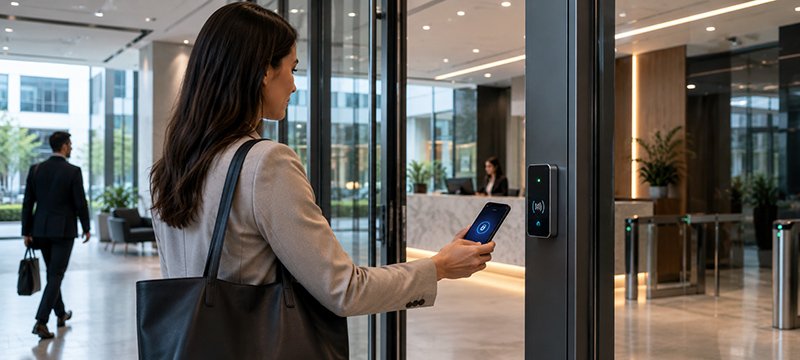
Commercial buildings have emerged as a significant arena for IoT adoption, with access management leading the charge. What once involved simple locks, keys, and logbooks at reception has transformed into an interconnected layer of technology that enhances safety, convenience, and operational efficiency throughout the building.
For facilities managers and building owners, this transition extends beyond mere hardware replacement. It involves fundamentally rethinking how individuals navigate through a space and leveraging that data to simplify everyday operations. This benefits everyone—tenants, security teams, and the visitors who pass through daily.
This article explores the mechanics of connected access systems, their importance in modern commercial buildings, and key considerations for planning an upgrade.
The Essence of Connected Access
A connected access system integrates doors, credentials, and monitoring software into a cohesive network, as opposed to treating each entry point as an isolated piece of hardware. Such a system allows buildings to react to real-time information, moving away from dependence on manual checks and end-of-day reports.
In practice, this might involve a mobile credential replacing a physical key card or an interactive dashboard that informs building managers about which areas are currently in use. The interconnectivity of devices transforms a simple door into a valuable source of operational insights.
Enhancing Daily Experiences within the Building
The most apparent advantage of connected access is the convenience it offers. Staff and visitors can easily navigate through a building using a mobile app or access badge, eliminating the need to fumble for keys or wait for someone to admit them. This eases the experience for everyone, particularly in larger office complexes or mixed-use developments.
Moreover, there are significant safety benefits. Connected systems can instantly lock down specific zones in emergencies, alert security teams to suspicious activities, and provide staff with the assurance that entry points are continuously monitored, rather than checked sporadically by guards.
Facilitating Smarter Building Management
The advantages of connected access extend beyond mere entry management; the data collected plays a pivotal role in broader building management strategies. Access logs can reveal occupancy trends that help dictate cleaning schedules, energy consumption, and even the long-term layout and utilization of the building. For those evaluating options, resources on selecting the best door access systems detail the key distinctions that matter most in commercial settings.
This level of operational visibility empowers facilities teams to act proactively rather than reactively. Instead of waiting for issues like overcrowded meeting rooms or unused floors to be reported, managers can proactively address patterns before they escalate.
Selecting the Right System for Your Commercial Space
Not every commercial building requires the same level of connected access. A single-tenant office has inherently different needs compared to a multi-tenant building with shared amenities. Consequently, the chosen system should align with those distinct requirements. Modern commercial security frameworks integrate access control, video surveillance, visitor management, and real-time monitoring, promoting a more holistic approach to building security.
Essential questions to consider include how well the system integrates with existing security measures, the processes for issuing and revoking credentials, and the system’s reliability during network disruptions. Industry leaders frequently cover building technology trends that help contextualize these decisions within the broader market landscape.
Implementing an Effective Rollout
A successful implementation typically begins with a pilot program in a specific section of the building, allowing facilities teams to adjust settings, train staff, and collect feedback from daily users. Communication is just as crucial as the technology itself. When staff members understand the workings and benefits of the system, adoption tends to be smoother, minimizing any early friction that could lead to complaints later on.
The Broader Implications for Smart Buildings
Connected access is rarely a standalone solution; it usually coexists with other smart building technologies, ranging from lighting to climate control, all sharing data for enhanced operational efficiency. Research shows that commercial buildings that incorporate connected technologies across various systems experience measurable improvements in efficiency and occupant satisfaction.
As commercial structures continue to evolve, access management is increasingly viewed as a foundational element rather than an afterthought. Its close interaction with the daily users of the building makes its successful implementation particularly valuable.