
Managing a business involves juggling various roles—including salesperson, marketing expert, and social media manager—while also tackling a growing list of administrative tasks and financial responsibilities. For home service contractors such as plumbers, electricians, roofers, HVAC technicians, and cleaners, the need to balance these duties with a demanding workload can quickly lead to overwhelm.
In addition to performing their specific trades, contractors must also create estimates, schedule appointments, collect payments, and maintain financial records. For many in the home services sector, these administrative tasks are as critical as the core work they perform, though this is often overlooked.
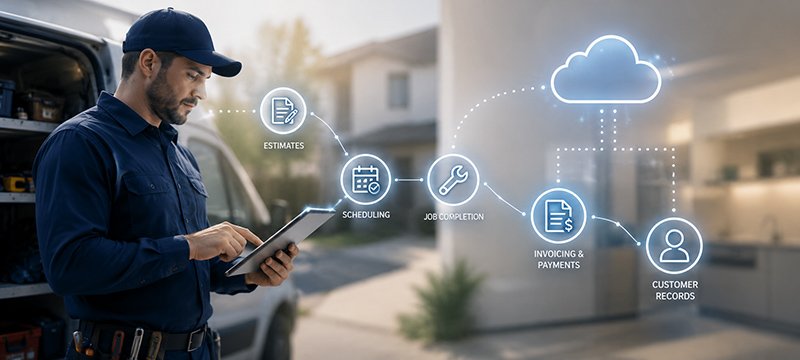
This is where invoicing software plays a pivotal role. Once seen primarily as tools for generating invoices, contemporary platforms have developed into all-encompassing business management solutions. They allow contractors to streamline estimates, document completed tasks, track payments, and organize customer information—all in one accessible location. By consolidating these everyday administrative activities, invoicing software significantly reduces manual processes, enhances accuracy, and frees up valuable time for contractors to concentrate on delivering high-quality services instead of getting bogged down in paperwork.
Enhancing Efficiency for Home Service Contractors
For many tradespeople like plumbers, electricians, roofers, and HVAC engineers, the real challenge lies not in generating a single invoice but in managing numerous small jobs, tracking outstanding payments, and keeping customer records up to date while on the move. As workload increases, reliance on paper records, spreadsheets, and multiple applications can slow operations and increase the likelihood of mistakes.
Modern invoicing software integrates estimates, invoices, payment statuses, and customer records into a single digital workflow accessible from both the office and the field. With support from smartphones, tablets, and other connected devices, technicians can update job-related information immediately after completing their tasks, while office staff can monitor progress in real time.
The Shift from Paper Invoices to Digital Workflows
As home service businesses expand, managing paper-based administration becomes increasingly complex. Handwritten invoices, printed job sheets, and spreadsheets make it challenging to track previous work or verify customer details, leading to more difficult tax reporting. Often, information is duplicated across multiple documents, heightening the risk of errors and slowing down administrative functions.
Digital invoicing software replaces these disparate systems with a cohesive workflow linking estimates, job records, invoices, payment collection, and reporting. By capturing information closer to where tasks are completed, contractors can maintain more reliable records and minimize administrative gaps.
Facilitating Collaboration Between Field Technicians and Office Managers
A successful home service operation relies heavily on the seamless flow of information between technicians on-site and office teams responsible for coordinating schedules, managing payments, and ensuring customer communication. In the absence of a shared system, updates typically depend on phone calls, handwritten notes, or manual data entry once technicians return to the office.
Implementing shared invoicing workflows enhances collaboration by enabling field technicians to document completed work, labor hours, materials used, and customer approvals directly from mobile devices. Office managers can instantly review job details, issue invoices, track payment statuses, and generate financial reports using the same information.